Men’s Shirt Collars Explained: Types, Construction and Key Differences
The collar is one of the most important structural elements of a men’s shirt. It defines how the shirt interacts with the neck, jacket, tie, and the overall upper silhouette. The real difference between collars is not in their names, but in geometry: spread angle, point length, collar stand height, interlining, and overall proportions. Below are the main types of shirt collars used in classic and contemporary menswear.
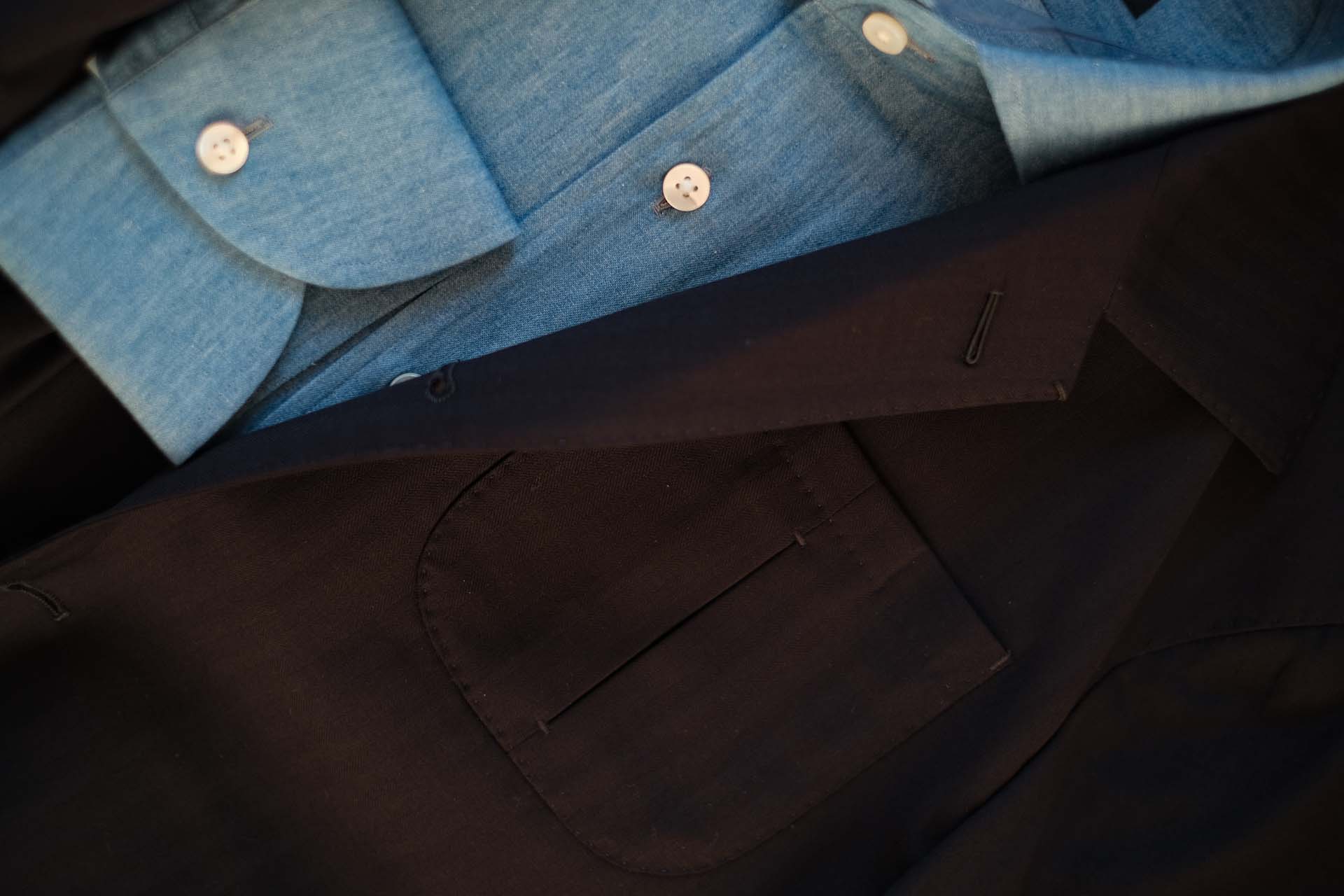
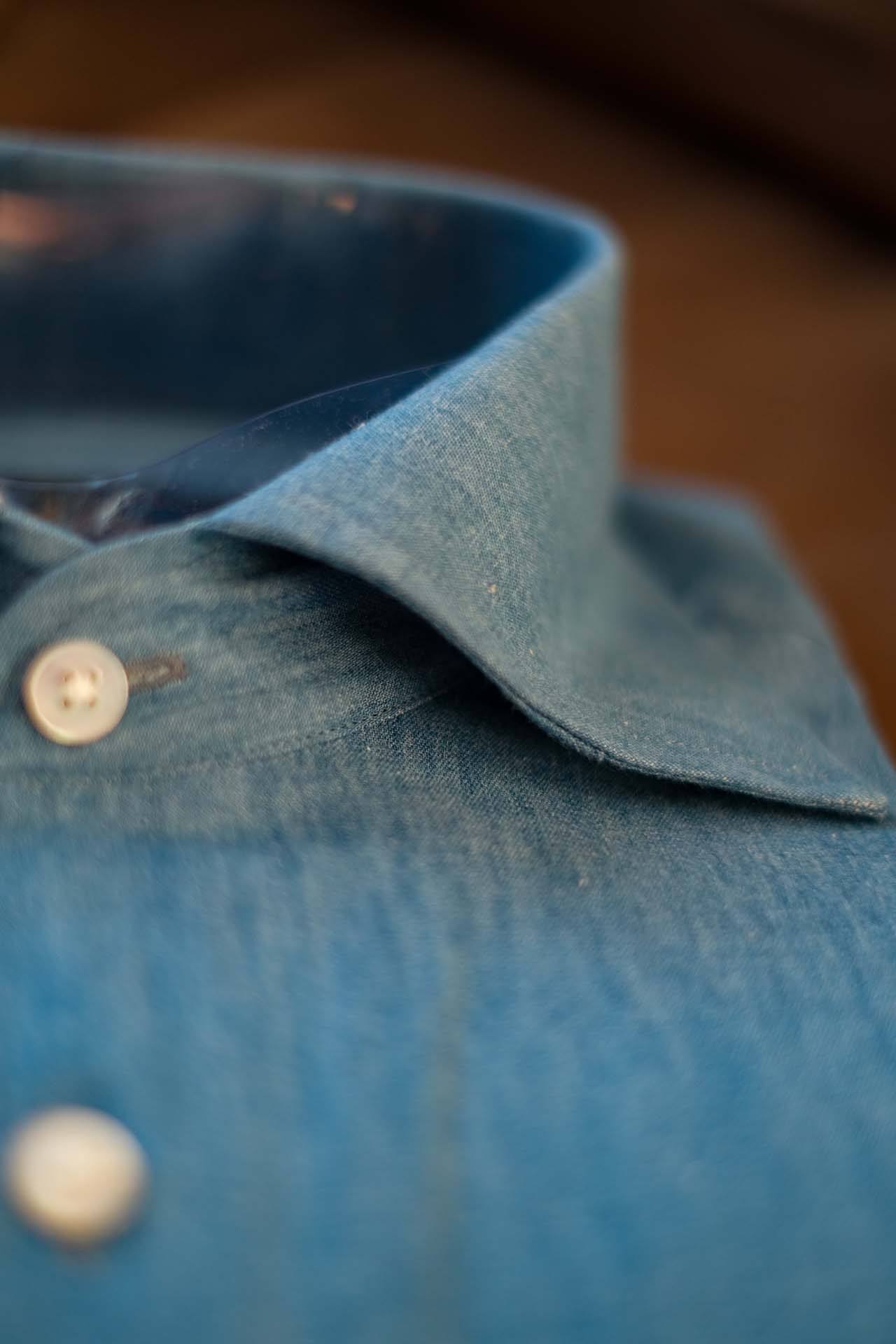
Point / Straight Collar
The most common and traditional collar in classic men’s shirts.
Technical specifications:
- spread angle: 45–60°
- point length: 7–9 cm in classic proportions
- collar stand height: 3.5–4 cm
- interlining: soft to medium
- Construction details:
The collar points are directed downward and sit relatively close together. This geometry allows the collar to sit cleanly under a jacket and work reliably with a tie. Point length is critical: shortened points (5–6 cm), typical for mass-market shirts, tend to look simplified and unbalanced.
Where it is used:
Business shirts, formal and everyday tailoring, universal wardrobe staples.
Terminology note:
This collar is often referred to as a “French collar” in everyday language. This is not a technical tailoring term, but a colloquial way to describe a classic, conservative collar shape.
Semi-Spread / Spread Collar
A more open variation of the classic collar.
Technical specifications:
- spread angle: 70–100°
- point length: 7–8.5 cm
- collar stand height: 4–4.2 cm
- interlining: medium, flexible
Construction details:
The points are set wider apart while maintaining balance. Proper stand height is essential; without it, the collar loses structure when worn open without a tie.
Where it is used:
Modern tailoring, jackets with wider lapels, versatile everyday shirts.
Terminology note:
Often called an “Italian collar”, reflecting stylistic tradition rather than a distinct construction category.
Cutaway / Wide Spread Collar
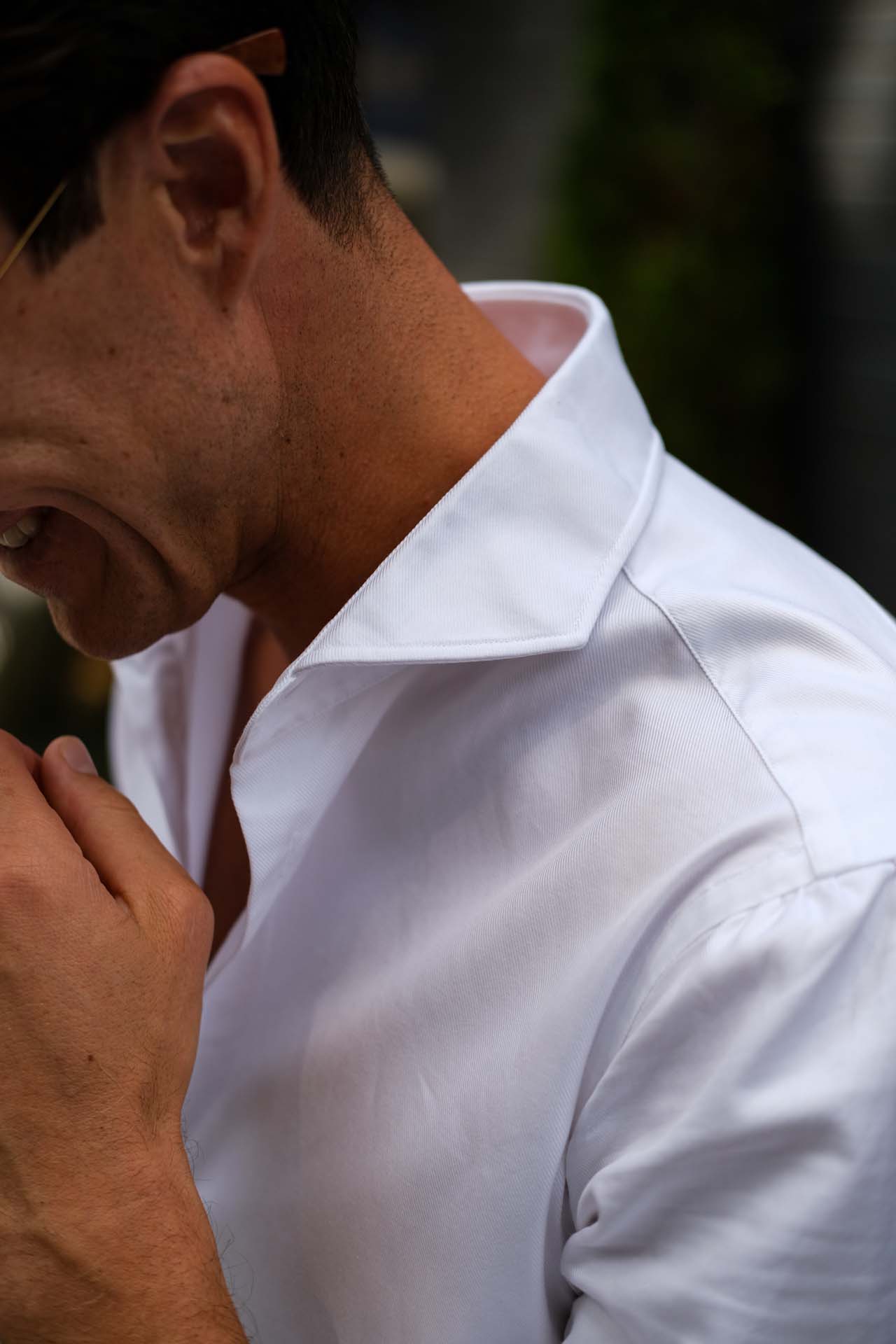
The most open and expressive collar shape.
Technical specifications:
- spread angle: 120–180°
- point length: 7–8 cm
- сollar stand height: 3.7–4.2 cm
- сinterlining: precise, structured but not stiff
- Construction details:
The points are positioned almost parallel to the shoulders. This collar demands accurate drafting and clean stitching — construction flaws are immediately visible. Simplified interlining leads to collapse and loss of shape.
Where it is used:
Tailored shirts, formal outfits, shirts designed to be worn with a fuller tie knot.
Button-Down Collar
A collar with buttoned-down points.
Technical specifications:
- point length: 7–9 cm
- collar stand height: lower than classic dress collars
- interlining: minimal or none
Construction details:
The defining feature is the collar roll — a natural, soft curve formed by proper shaping and fabric choice. In mass-market shirts, the collar is often flat and lifeless, with buttons serving a purely decorative purpose.
Where it is used:
Casual shirts, Oxford cloth, knitwear layering, informal jackets.
Club / Rounded Collar
A distinctive collar with rounded points.
Technical specifications:
- point length: 7–8 cm
- rounding radius: precisely defined and symmetrical
- collar stand height: 3.8–4 cm
Construction details:
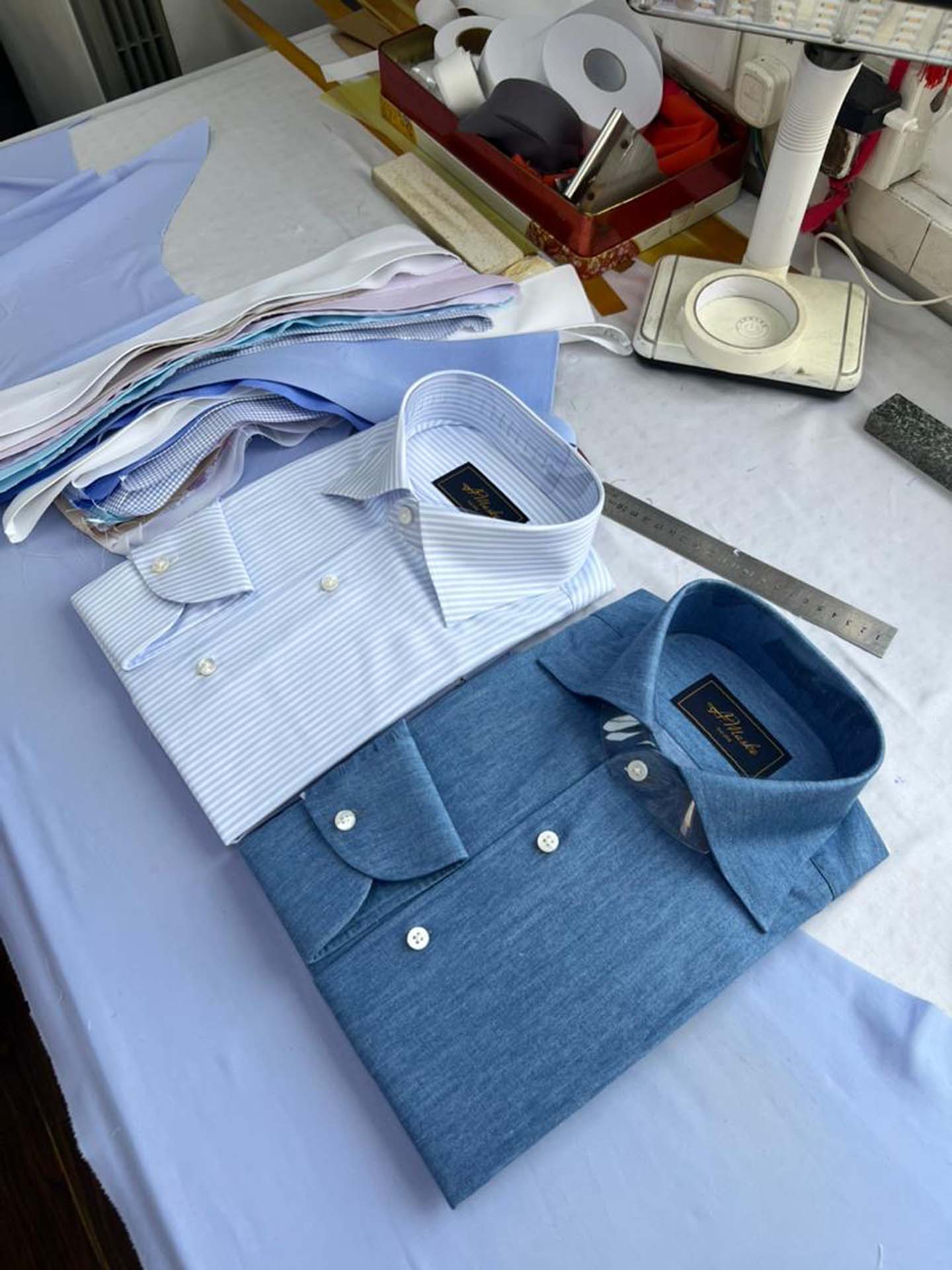
Any asymmetry or deviation in the curve is immediately noticeable. Because of this, the club collar is more often found in bespoke or made-to-measure shirts rather than mass production.
Where it is used:
Classic, vintage-inspired looks, character-driven tailored shirts.
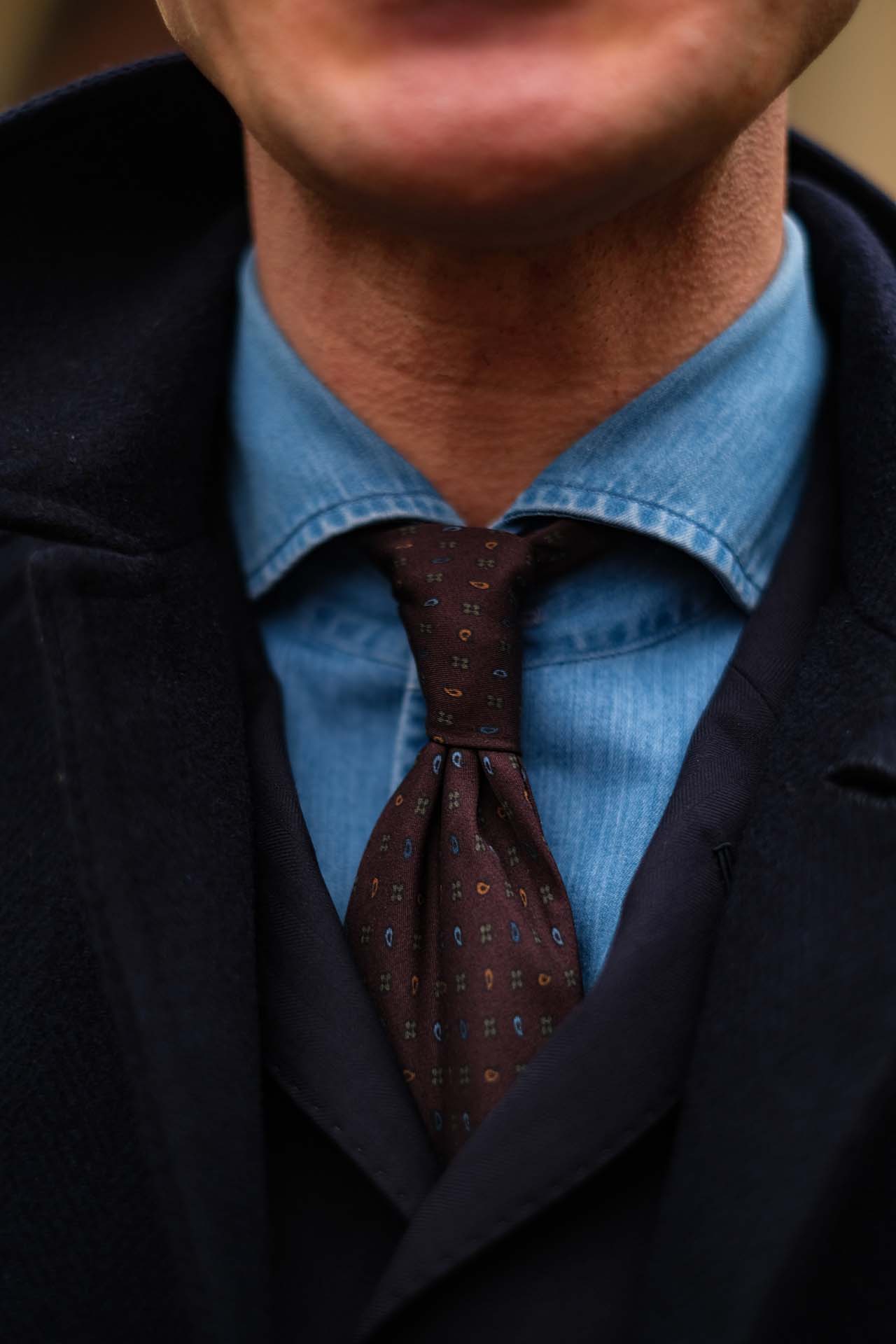
Why Mass-Market Collars Look Different
The difference lies in construction rather than naming:
- shortened points (5–6 cm instead of 7–9 cm)
- excessively stiff interlining
- poorly balanced or overly soft collar stands
- simplified proportions between spread and point length
As a result, the collar may look acceptable on a hanger but fails in wear: it loses shape, clashes with tailoring, and ages poorly.
Final note
These are the main collar types, but they are not exhaustive. Many ateliers and individual tailors deliberately search for their own style and proportions, often modifying classical patterns. Small details — a few millimeters in point length, a slight change in stand height, or a different interlining — can significantly alter the character and behavior of a collar.
This is why making a shirt to individual measurements is an art in itself. A well-designed collar must work in harmony with the wearer’s neck, posture, face shape, and wardrobe. It is not only about fit, but about balance, comfort, and personality.
Experiencing a made-to-measure or bespoke shirt is something every gentleman should go through at least once. It deepens the understanding of clothing and craftsmanship — and once experienced, compromises become much harder to accept.
At the moment, we are working on integrating a shirt configurator into our website. This will allow any gentleman, regardless of where he is located, to create a shirt with us remotely — selecting the details, proportions, and design elements he wishes to realize. Along the way, we will be sharing more about the process, the decisions behind each element, and the craftsmanship that brings a shirt from an idea to a finished piece.
Quote of the Week
Nothing can bring you peace but yourself.
Ralph Waldo Emerson
Fact in the Spotlight
Ludwig Wittgenstein believed that the most important things in life cannot be explained with words. In his view, they can only be lived and shown through the way one lives, rather than described. That is why he wrote: “Whereof one cannot speak, thereof one must be silent.
That’s all for today. See you on Saturday next week!
Yours sincerely, Anton Masko