How to Wash and Iron Your Trousers Properly
Learning how to wash and iron trousers correctly helps them keep their shape, last longer, and look elegant every day. Whether your trousers are made from wool, cotton, or linen, the right care preserves their structure and gives them that quiet confidence good clothing always carries.
Trousers are one of the most honest pieces in a man’s wardrobe. They immediately show how someone treats himself and the things around him. You can wear a perfect jacket and shirt, but if the crease has faded, the fabric looks tired, or the shape is gone — the whole impression collapses. Proper trouser care isn’t just about cleanliness. It’s about respect for form, texture, and the quiet discipline behind good taste.
A Bit of History
The crease wasn’t invented for style. It appeared by accident — when factories folded and pressed trousers for shipping, the line remained. Over time it became a symbol of precision and order, the visual spine of a man’s look. Even today, a sharp crease adds structure and calmness, while a softer one tells its own story. Either way, it’s about attention, not perfection.
Fabrics and Their Nature
Most good trousers are made from wool, cotton, or linen — each with its own rhythm and behavior.Wool is noble and alive. It keeps its shape, breathes, and doesn’t like haste. Wash rarely, in cool water around 20–30°C, using a gentle detergent for wool — no enzymes, no bleach. Never wring or tumble dry. Let the water drain, smooth the seams with your hand, and hang to dry naturally. Wool responds best to air and time.
Cotton is practical and calm. It’s easy to live with, but it still needs attention. Wash at 30°C on a gentle cycle, with a mild detergent for colors. Avoid overdrying — cotton should stay slightly damp before ironing. That’s when it becomes soft and obedient to shape.Linen is honest. It wrinkles, but beautifully. It loves water, but not heat. Wash at 30–40°C with a mild detergent, no bleach, and iron while still slightly damp, with hot steam through a thin pressing cloth.
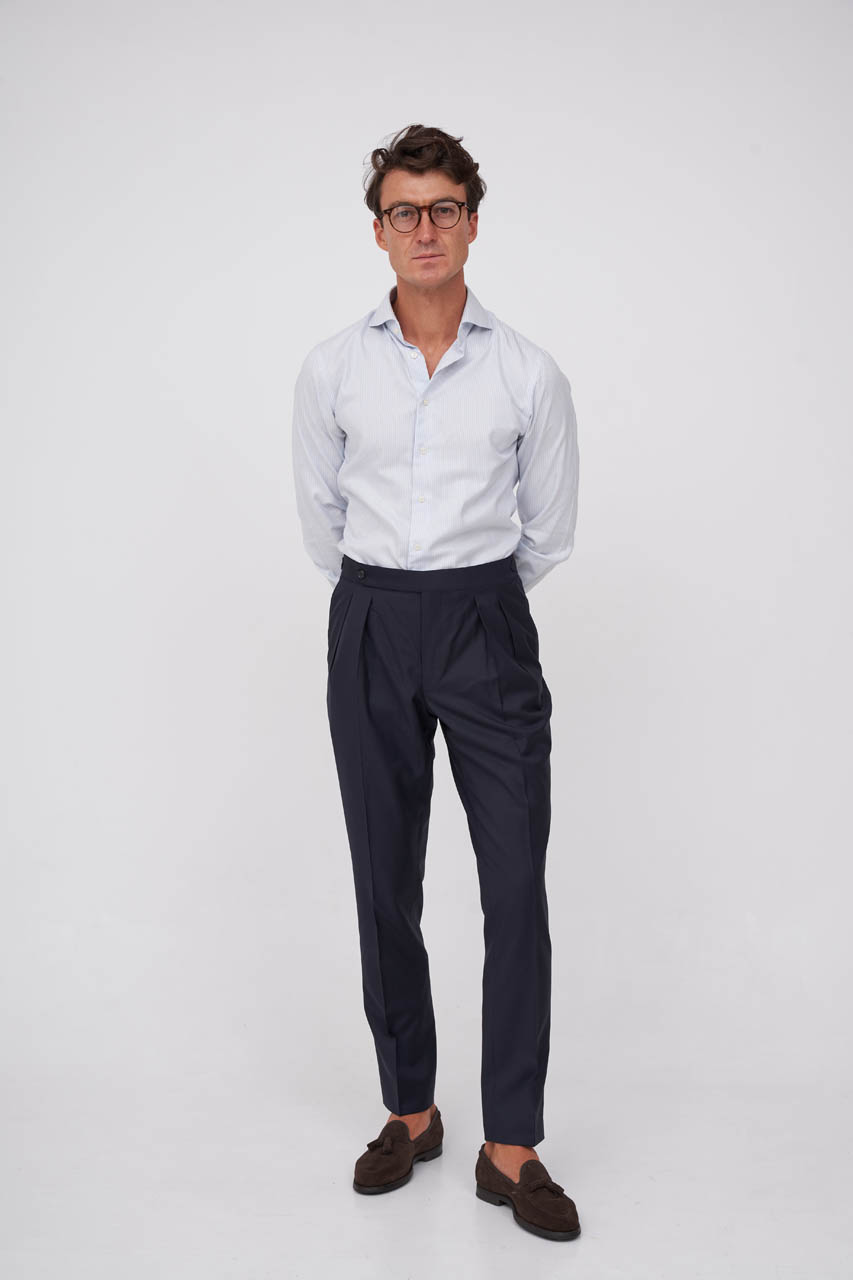
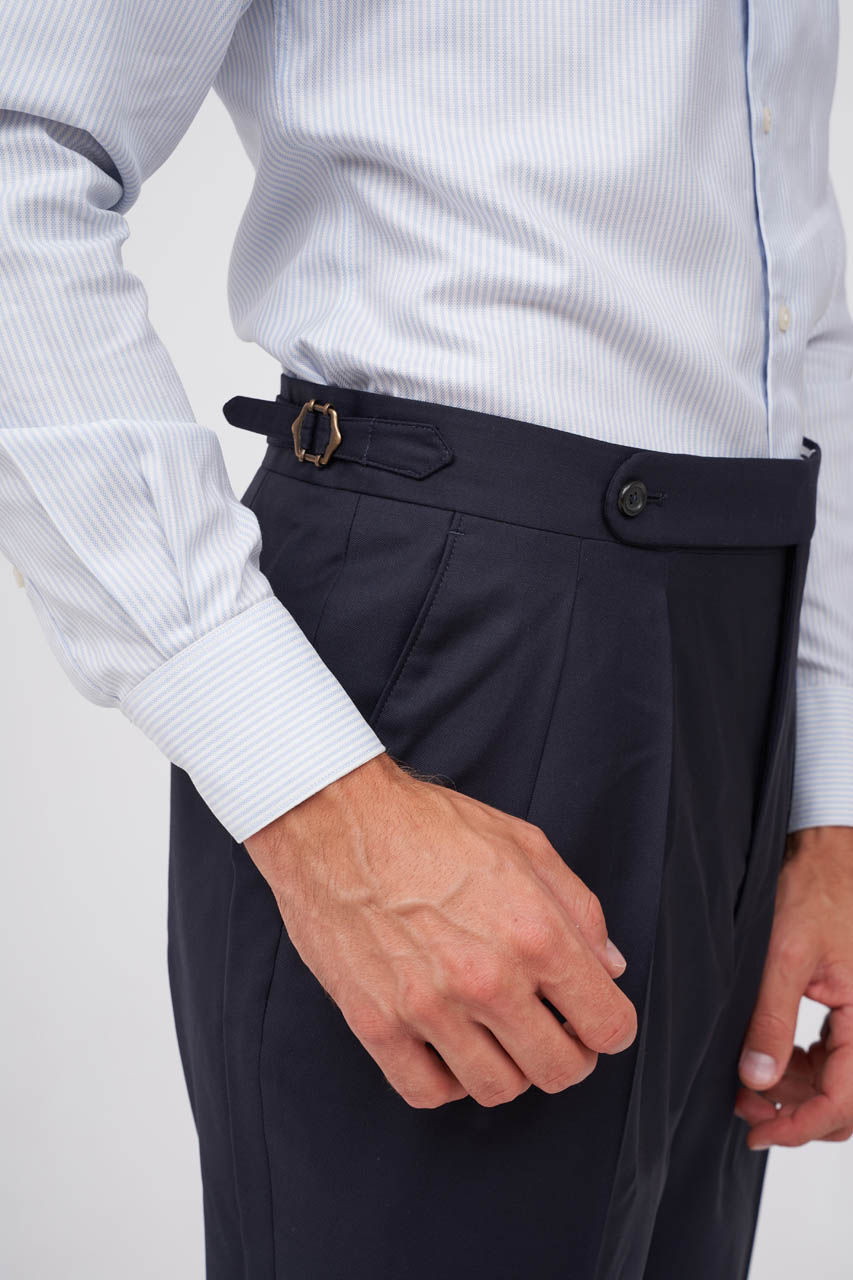
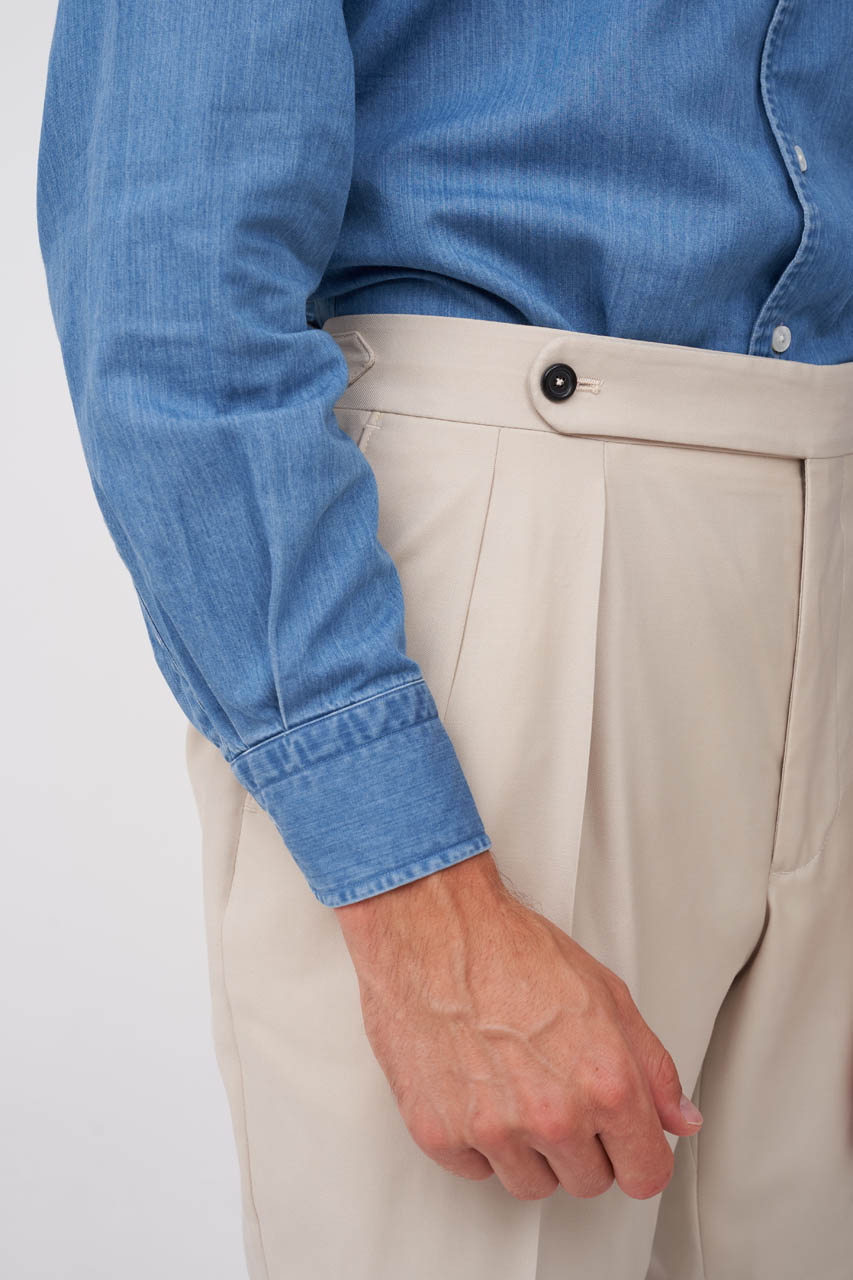
Proper Trouser Care: Washing and Ironing Tips
Before washing, turn trousers inside out, close all zippers and buttons, and empty the pockets. Treat stains gently with mild soap and cool water, without rubbing. Wool trousers should be washed rarely — better to air and brush them. Cotton and linen can be washed more often, but only on delicate cycles, with no hot water or harsh detergents. Skip the dryer. Natural drying keeps the structure intact.
When to Use Dry Cleaning
Use dry cleaning only when it’s really needed — for trousers with lining, glued parts, or stains you can’t remove yourself. For classic wool trousers, once a season is enough. Choose a cleaner that understands delicate fabrics — no strong heat, no heavy pressing.
Ironing the Right Way
Ironing isn’t about flattening — it’s about shaping. Start from the inside: waistband, fly, pockets. Then move to the seams, and finally to the crease. Fold the leg evenly, match the seams, apply steam, press the iron for a few seconds, then lift it. Don’t slide it back and forth — fabric should remember the line, not fear it. Wool likes medium heat, cotton and linen like higher heat, but always use a pressing cloth. After ironing, hang the trousers and let them cool — that’s when the crease sets properly.
Storage and Care Between Wears
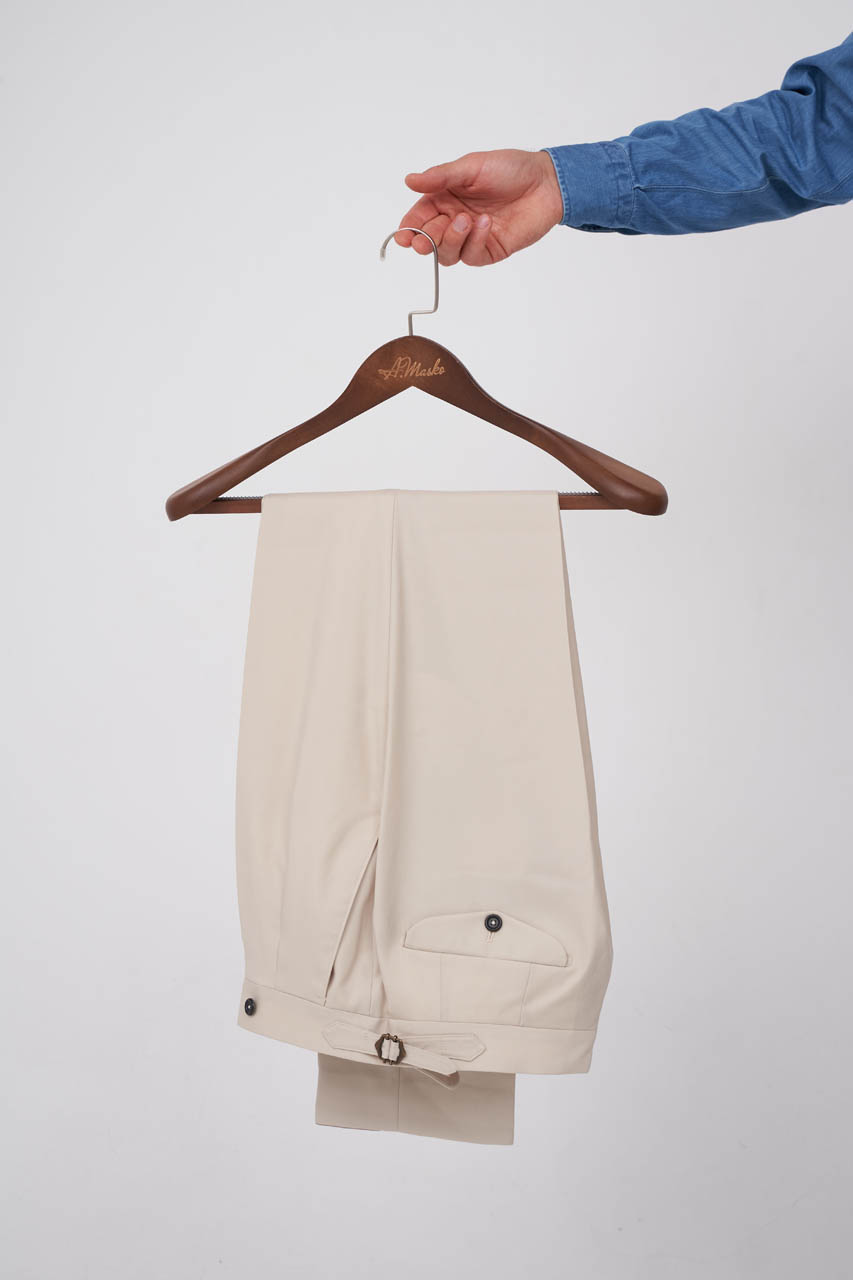
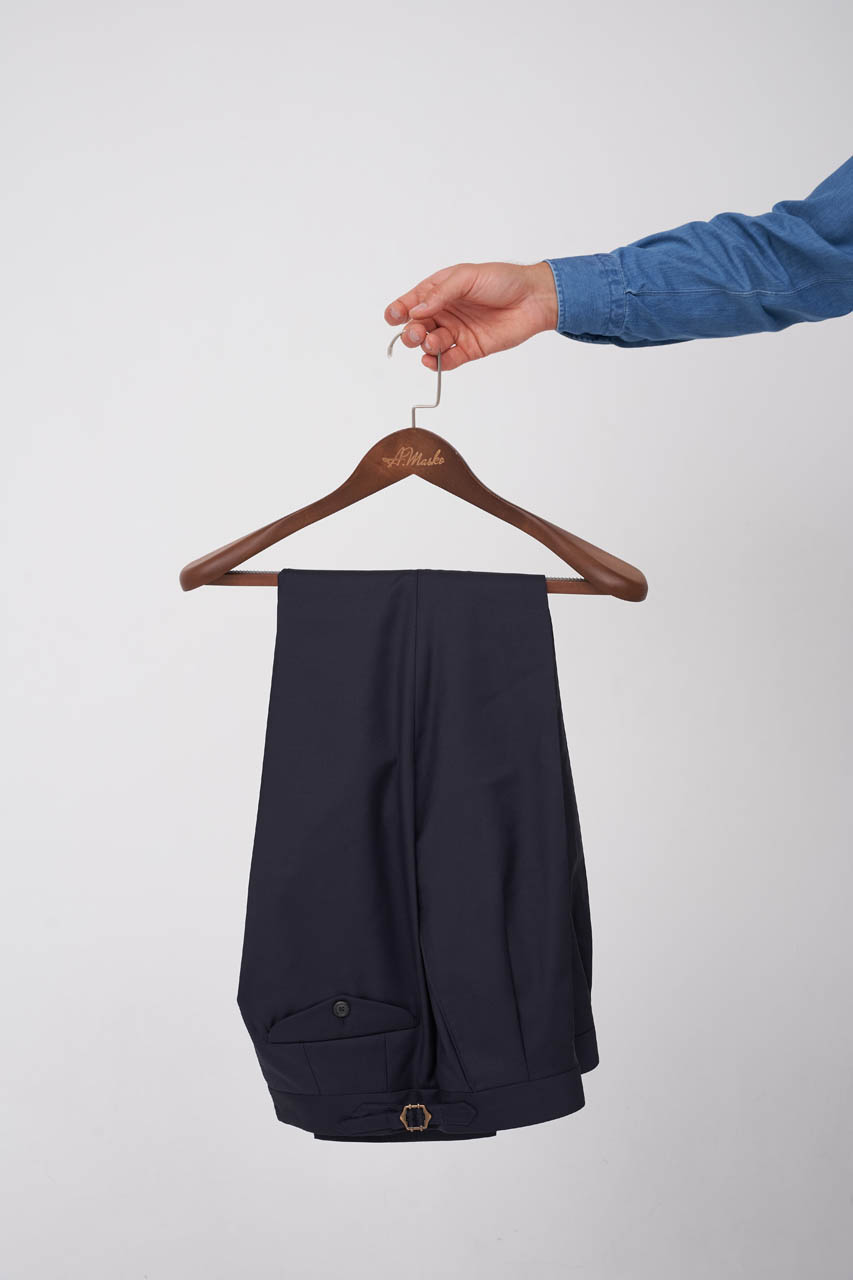
After wearing, let your trousers breathe. For wool — use a soft brush. For cotton or linen — a bit of steam is enough. Store them on wide hangers or those with soft clips. Never crowd them in the closet: wrinkles come not from wearing, but from lack of space.
A Simple Truth
Well-kept trousers aren’t about fashion. They’re about respect — for yourself and for the things that stay close to you every day. When you wash carefully and iron calmly, the fabric responds with gratitude. There’s a quiet pleasure in seeing clothes live longer, age better, and look even more natural with time.
Where to Find Yours
If you’re looking for trousers that hold their shape and are made with real attention to detail, you can choose them from us. We’ll help you with sizing, advise on fabric, and send them to you with care. Choose your color — we’ll take care of the rest.
Quote of the Week
Quality means doing it right when no one is looking.
Henry Ford
Fact in the Spotlight
The most expensive fabric in the world is vicuña wool. It comes from a wild animal native to the Andes, yielding only about 200 grams of fiber every two years. The material is so rare and fine that a kilogram can cost over $30,000. It’s almost weightless, softer than cashmere, and for centuries was reserved only for emperors.
That’s all for today. See you on Saturday next week!
Yours sincerely, Anton Masko