How to Choose the Right Trousers: Tips, Facts and Real Stats
In this issue, we cover five interesting facts about their history and design, useful statistics from European tailoring houses, and clear guidelines on how to choose the right pair. Whether you’re updating your wardrobe or simply curious, this overview offers practical insights into a classic menswear item.
5 interesting and important facts about trousers
- Trousers were once only for men. Before the 20th century, trousers were seen as men’s clothing. Women began wearing them during the World Wars for practical reasons while working.
- The oldest trousers were found in China. Archaeologists discovered wool trousers over 3,000 years old. They were made by nomads and already had a shape similar to what we wear today.
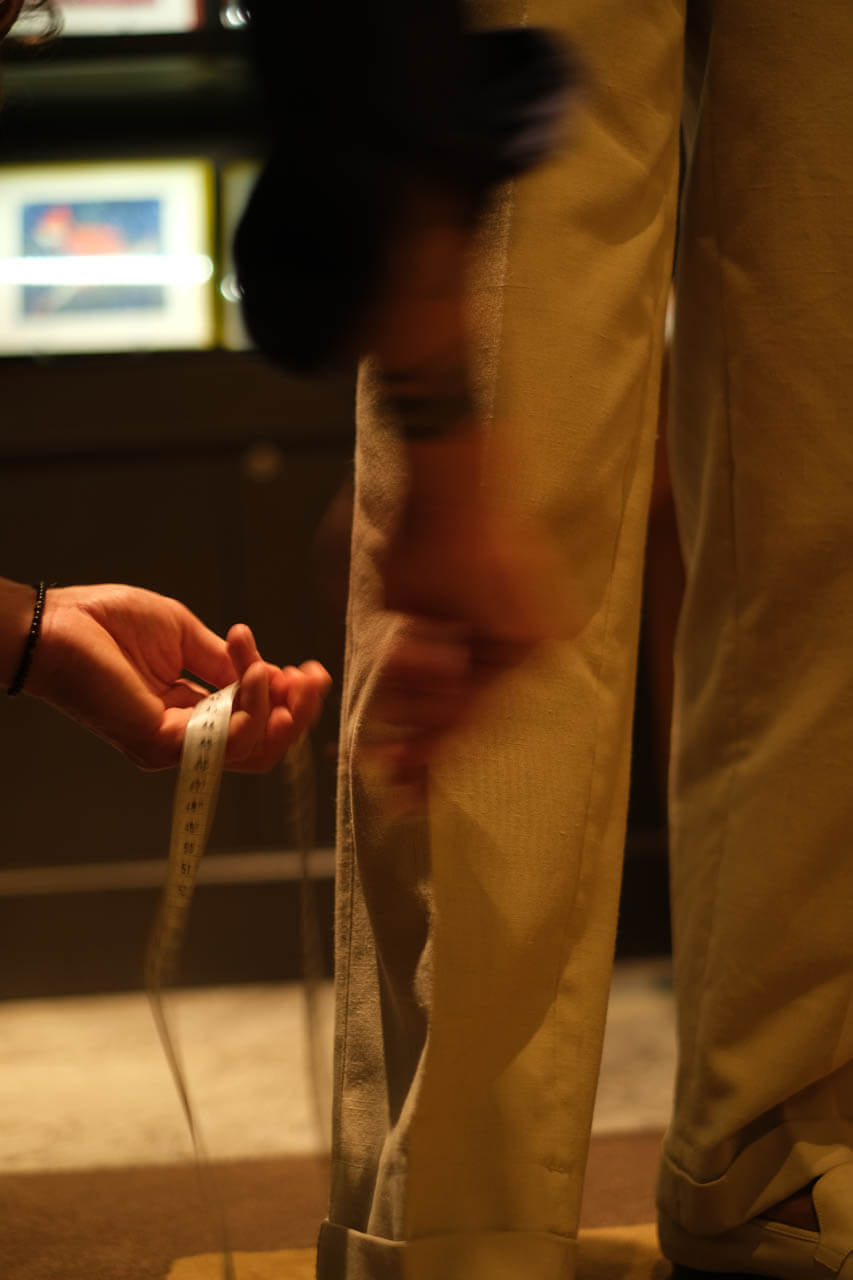
- A pair of tailored trousers can include up to 80 details. When made to measure, trousers take into account many things: fit, waist height, leg width, fabric direction, and more.
- Trousers are the most common custom order. In many European tailoring studios, about 60% of clients order trousers more often than jackets or shirts.
- The shape of trousers tells the story of the time. Slim trousers often reflect styles from the 1960s to early 2000s. Wide ones connect to the 1930s–40s or today’s relaxed fashion trend.

Some useful statistics
Based on data from European tailoring houses over the last 3 years:
Most popular trouser colors:
- Dark navy — 34%
- Charcoal grey — 29%
- Light grey / beige — 18%
- Olive / khaki — 9%
- Other (brown, checks, unusual fabrics) — 10%
Average ordering frequency: One client usually orders a new pair every 6 to 9 months.
Most common sizes (waist): European sizes 48–50 make up about 40% of orders. Sizes 46 and 52 — another 35%. The rest — 25%.
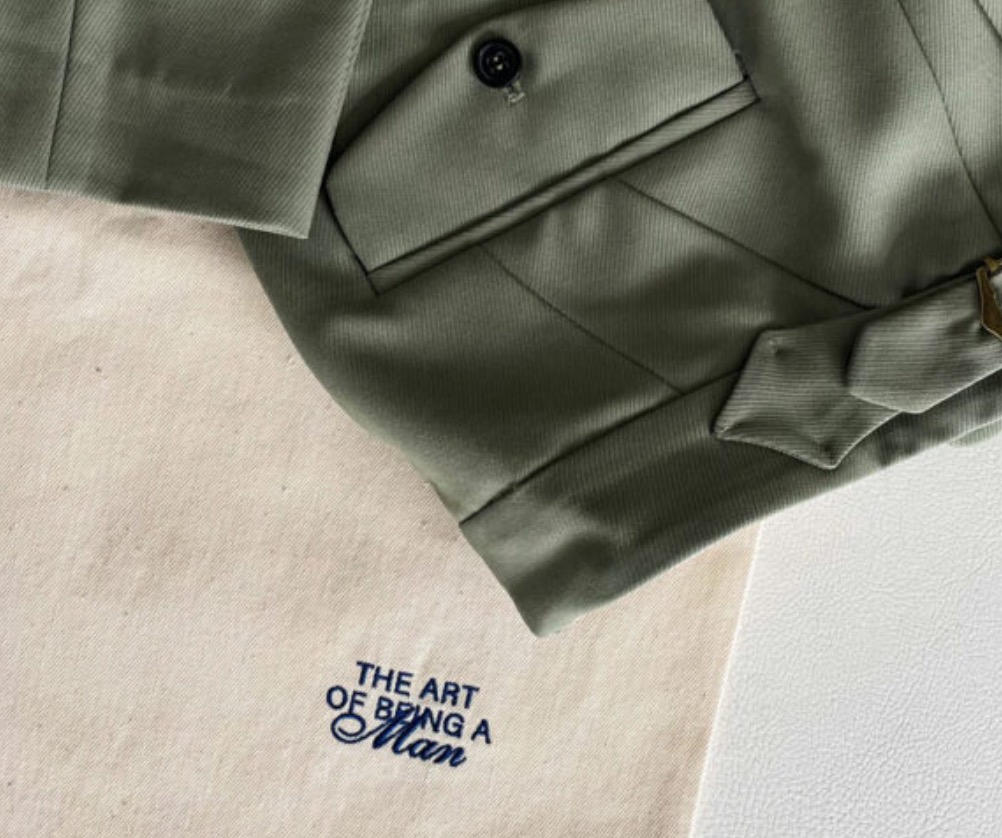
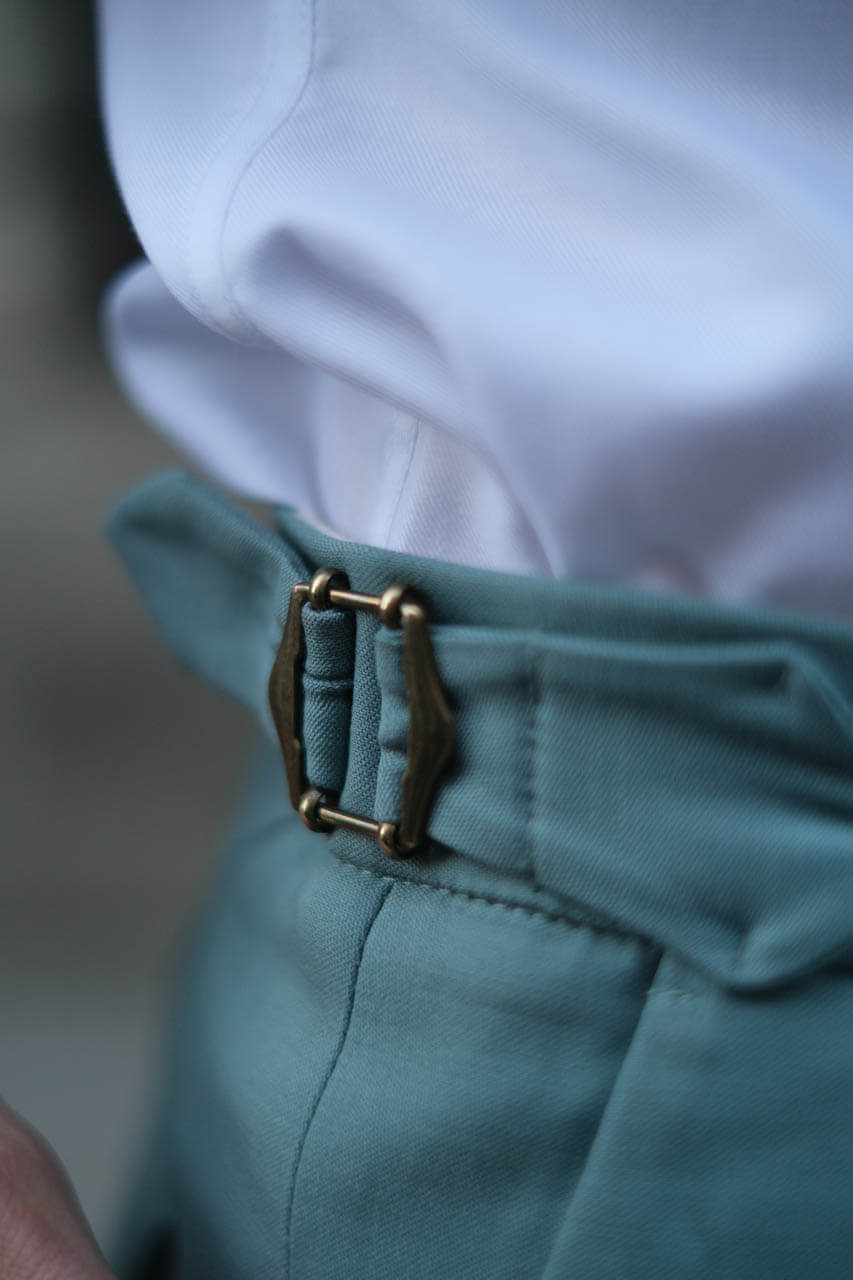
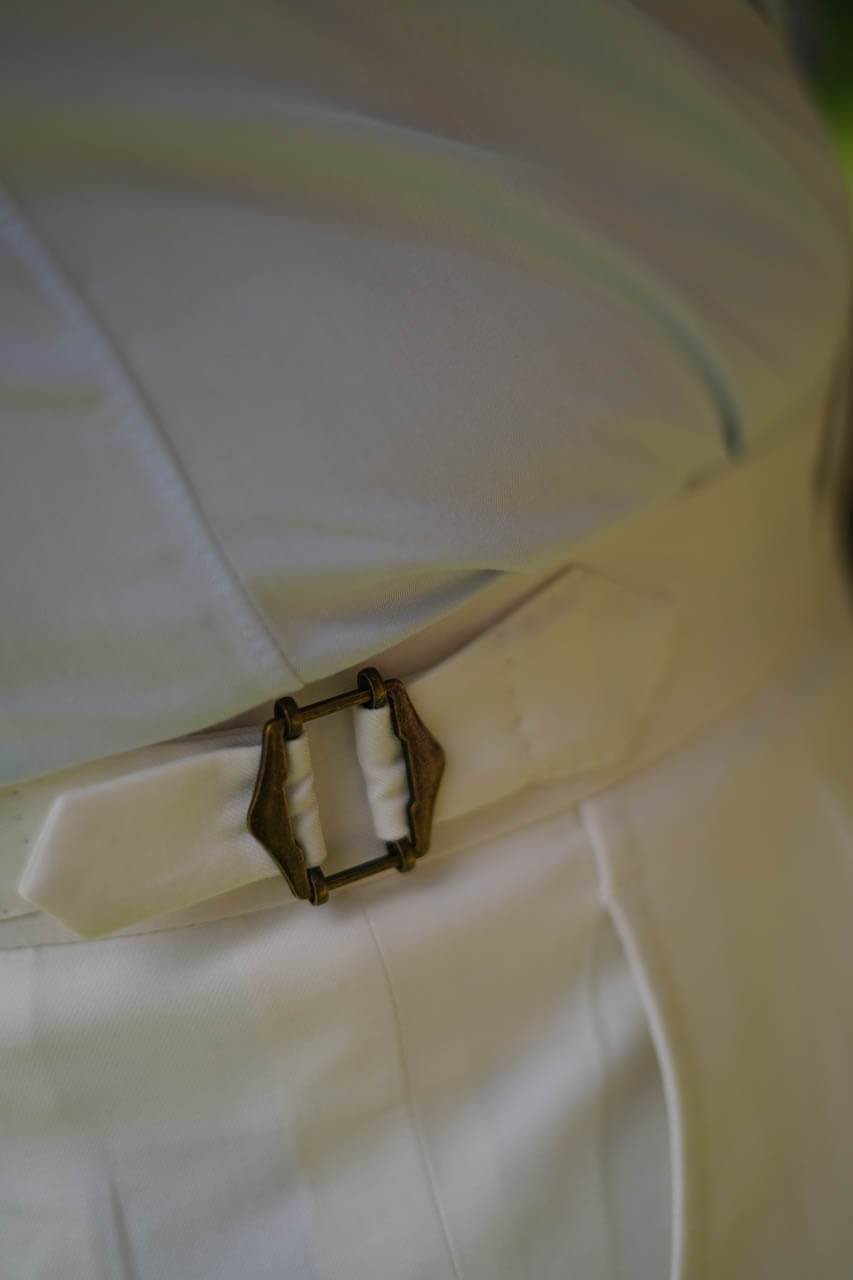
Waistband preferences: 62% of clients choose side adjusters instead of belt loops — it looks cleaner and more elegant.
Basic tips for choosing trousers
Fabric. Lightweight wool works year-round. Linen is great for summer, flannel for colder months. Avoid synthetic fabrics — they don’t breathe well and lose shape quickly.
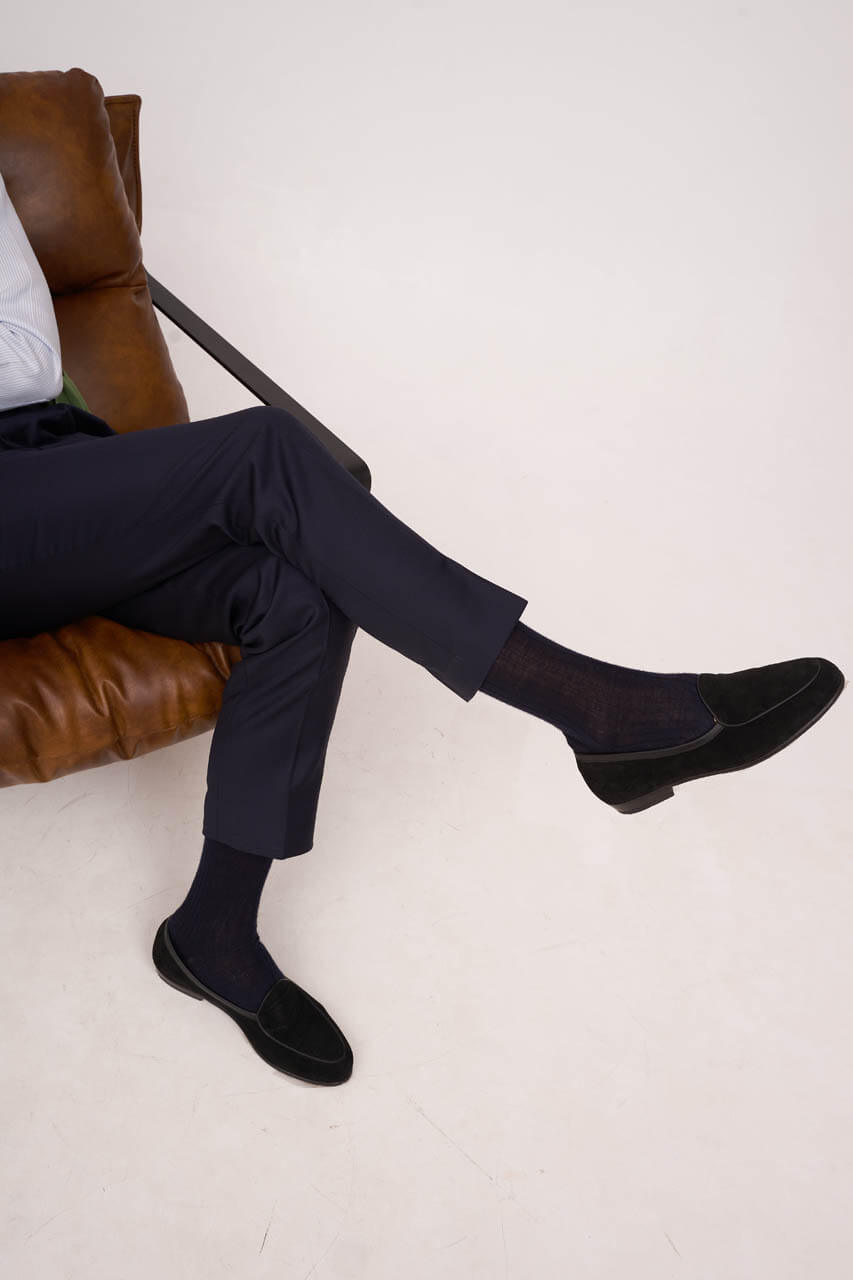
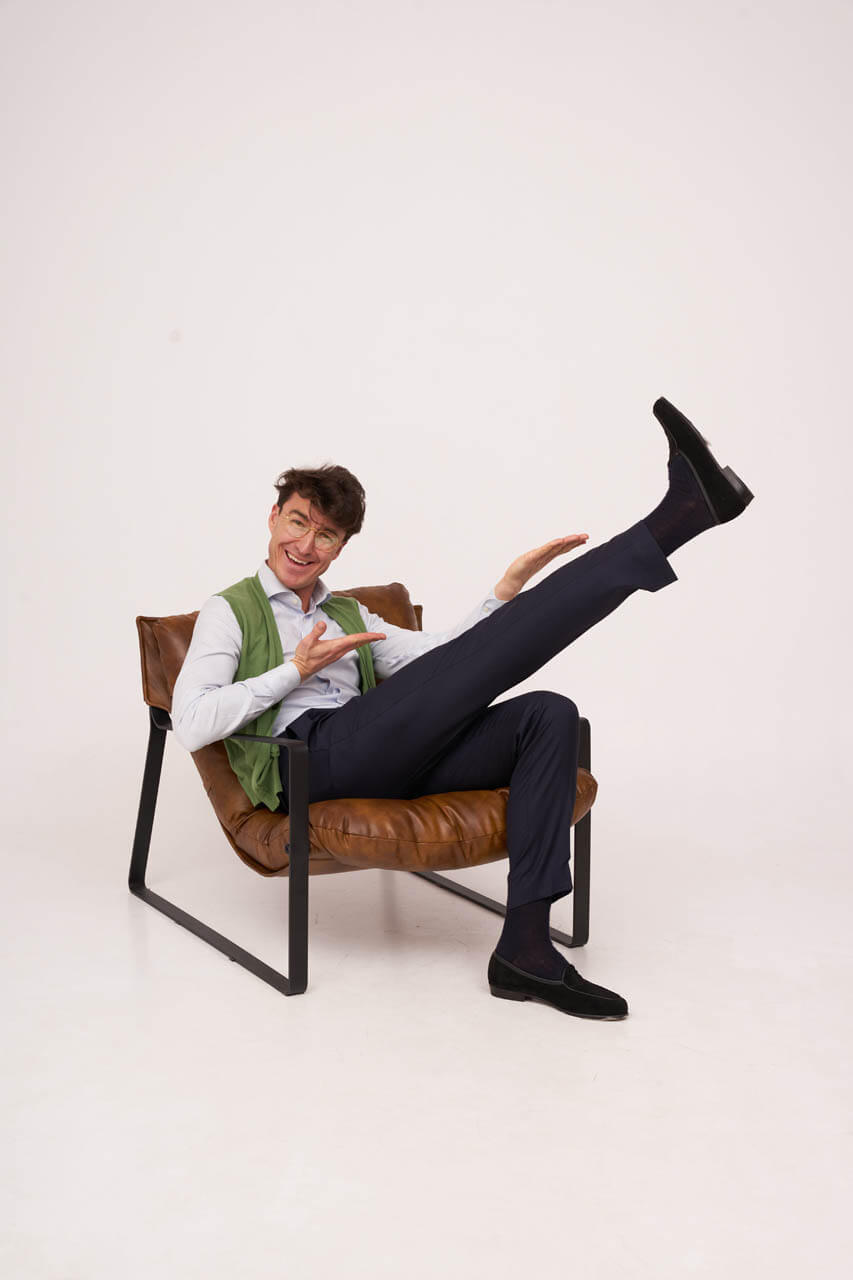
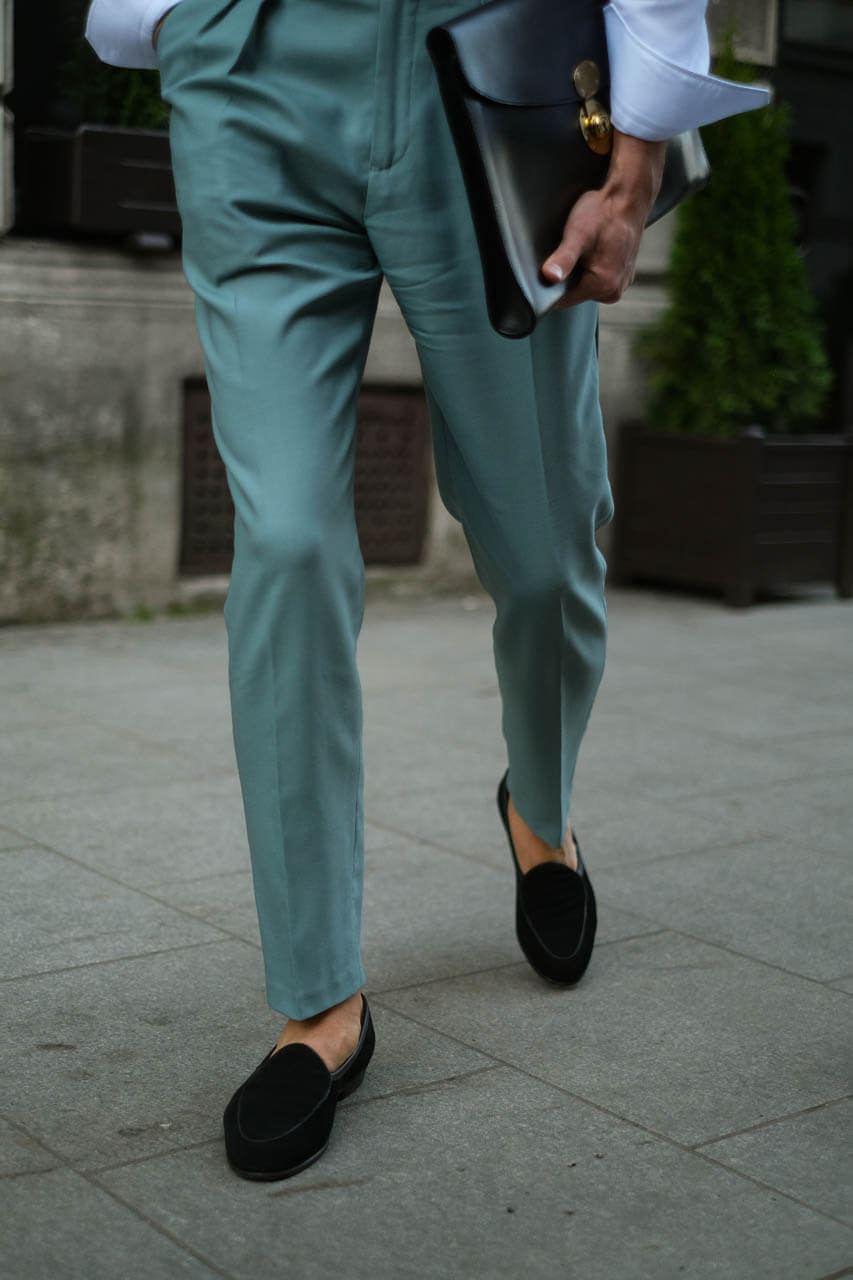
Fit. Trousers should sit on the waist without needing a belt. The length should gently meet the shoe in front without too many folds, and cover a bit of the back of the shoe.
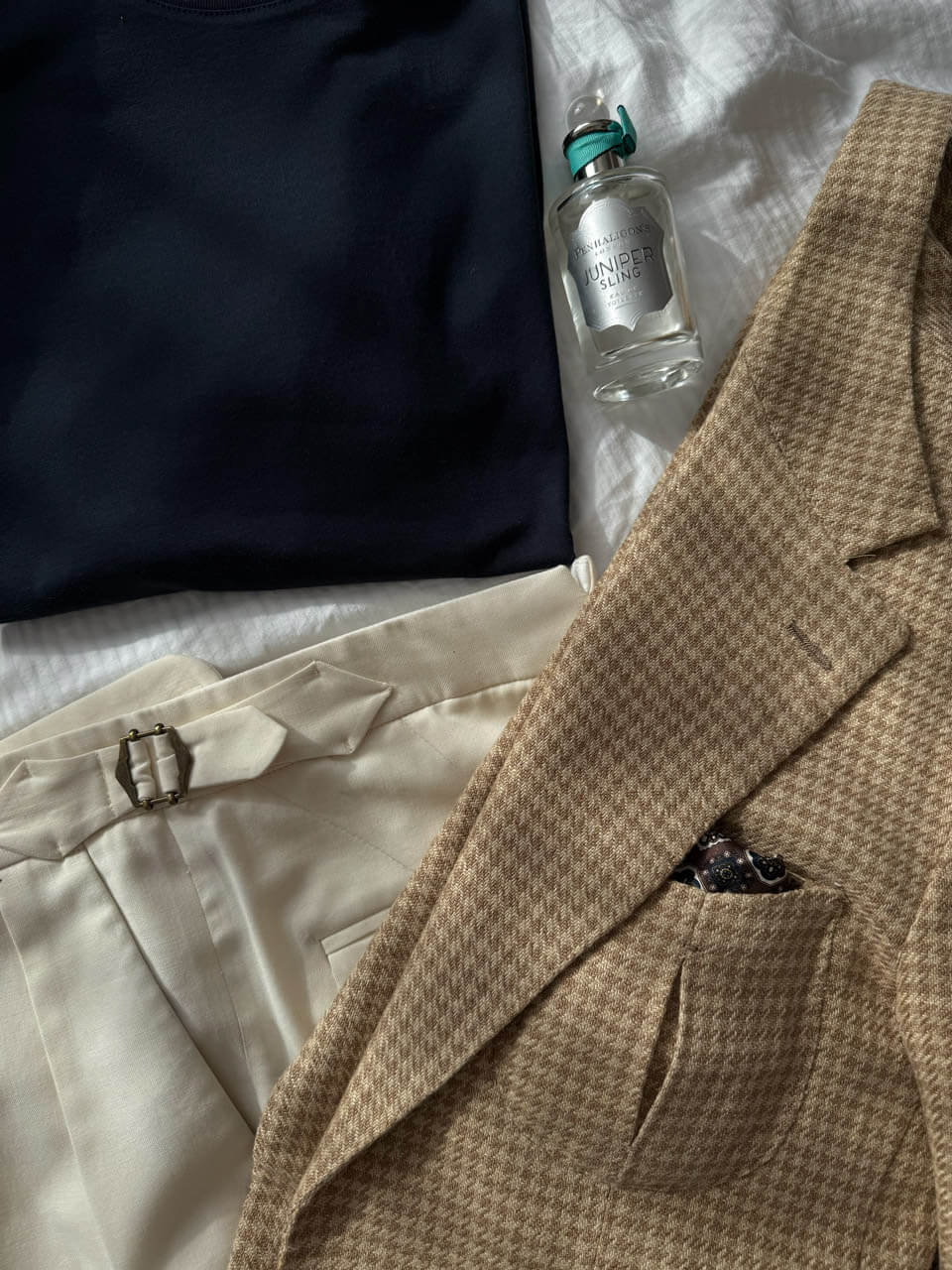
Style. Double pleats and side adjusters are a great choice. Pleats give comfort when sitting and walking, and help shape the waist. Side adjusters replace the belt and give the trousers a cleaner, more refined look.
Color. Dark navy — a classic base that works with almost anything. Olive — a soft, earthy tone that pairs well with white, brown, and beige. Grey — from light to charcoal, it always feels balanced and smart. Cream — light, elegant, perfect for spring and summer. Goes well with sand, green, or warm tones. These four colors are my go-to choices. You can build a full wardrobe with just them.
Conclusion
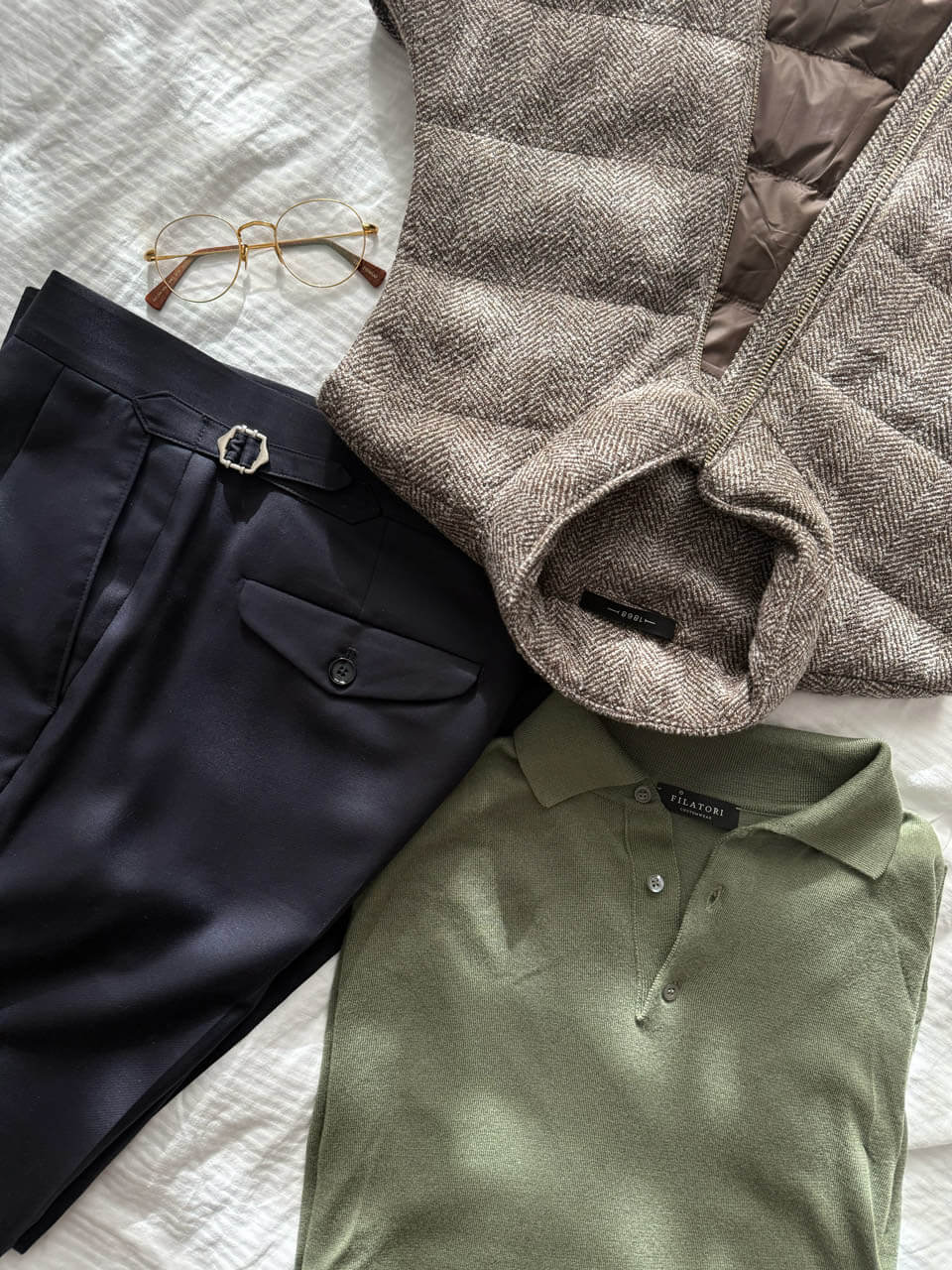
Good trousers are more than just clothing. They shape your look and connect everything together — shirts, outerwear, and shoes. Wear them with shirts, long-sleeve polos, knitted cardigans, or a proper coat. Shoes should be clean, simple in shape, and not too heavy. Everything should look calm and balanced.
A gentleman knows: well-made trousers show self-respect. They feel comfortable, fit properly, and work with your daily life. They don’t try to stand out — but they always look right. And if you’re looking for trousers like that, you can get them from us.
Fact in the Spotlight
Seneca was not only a philosopher — he was also one of the wealthiest men of his time. He wrote about simplicity, self-control, and inner freedom, while living in luxury and holding immense wealth. That’s what makes his reflections so powerful — they weren’t naive. He knew the value of things, but even more so, the value of not being owned by them. His thoughts on modesty and restraint come from experience, not theory.
Quote of the Week
Simplex sigillum veri.
The expression of truth is simplicity. Seneca
That’s all for today. See you on Saturday next week!
Yours sincerely, Anton Masko