Winter Gentleman Style: How to Build the Perfect Winter Wardrobe
Only recently I realized that winter is just around the corner — and I haven’t yet written to you about how to build a proper winter wardrobe. Today, let’s talk about how I approach winter style and the key pieces I rely on every season.
Before we begin, I want to wish you a good winter — one that brings you calm, growth, and gratitude for the small things that make you better.
The Overcoat — The Foundation of a Winter Wardrobe
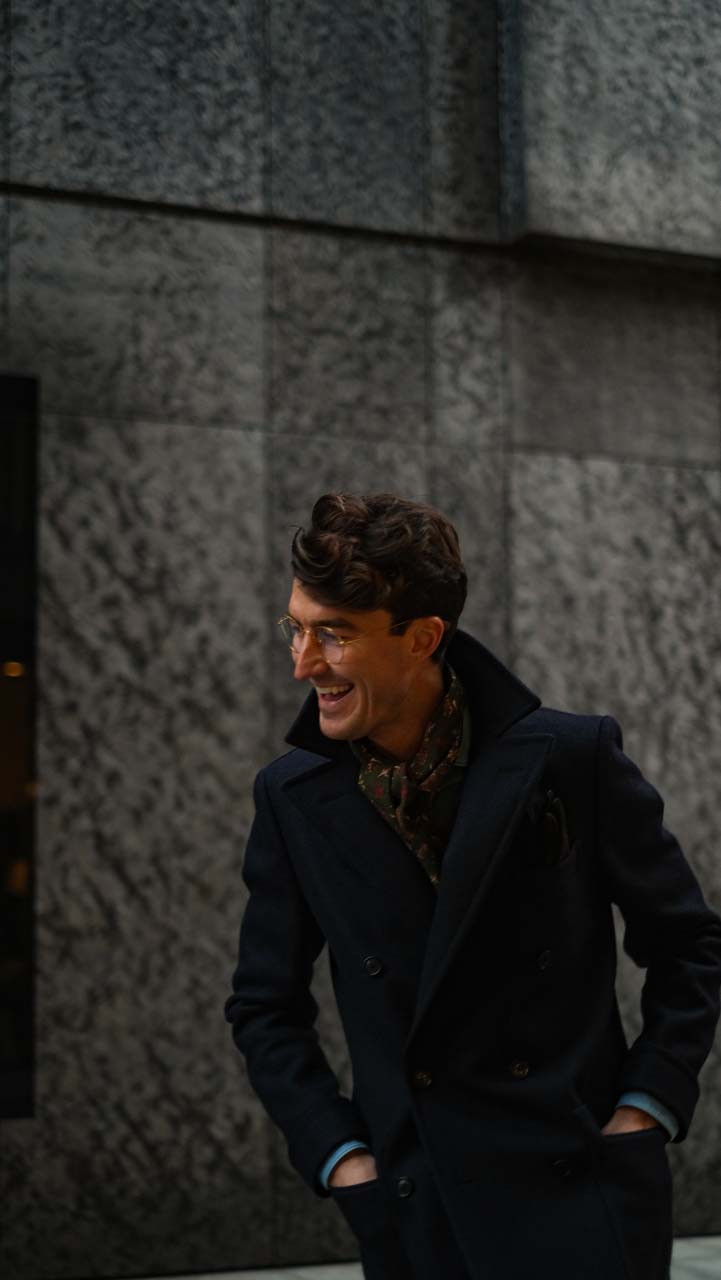
Let’s start with the most important piece.A good overcoat is your mood for the entire winter. That’s why I always say — it’s worth investing in a proper one, and ideally, having a few.
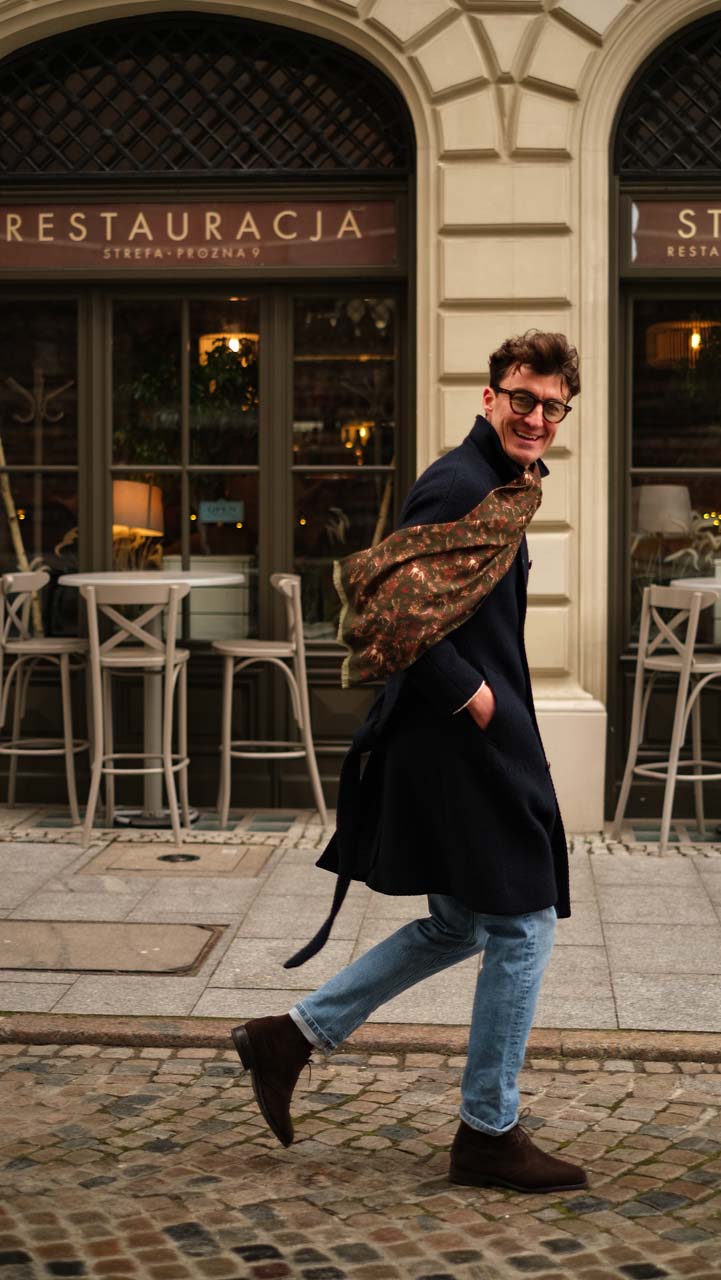
When it comes to color, my choice is always navy. It’s versatile, elegant, and works for almost any situation. Black, I don’t recommend. Grey — third in line.Textured fabrics, subtle patterns, or rich weaves always look great, but balance is key.You can play with details, but avoid adding unnecessary elements that take attention away from the coat itself. The goal is to enhance, not distract.
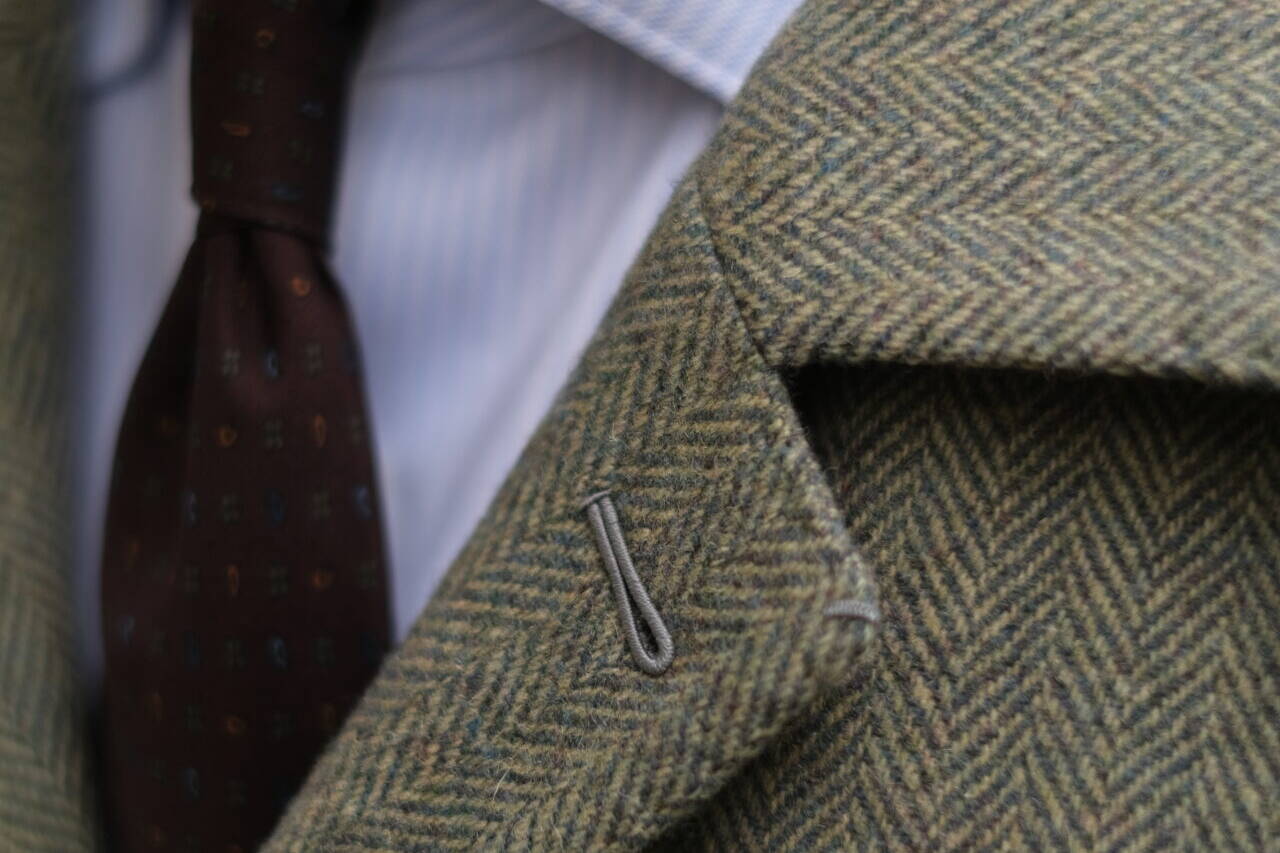
For this season, I have four main coats:– a navy raglan,– a navy ulster,– a grey raglan in houndstooth,– and an olive raglan in houndstooth as well.
If you want to read more about coat styles and their history, I’ve written a separate article on that — highly recommend revisiting it.
Footwear — The Balance Between Style and Function
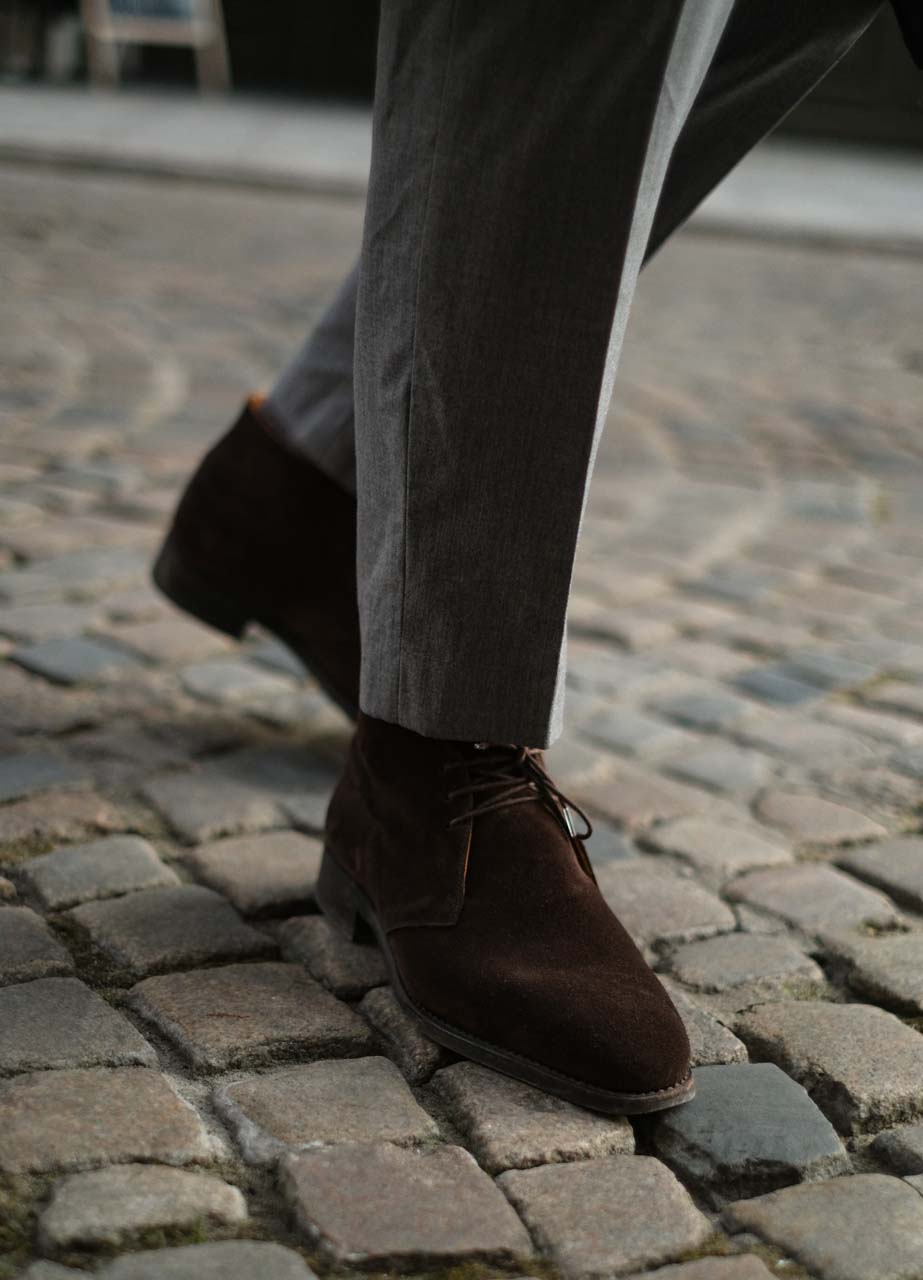
My philosophy on shoes is simple — I almost always go for suede. All my winter shoes are made of suede leather. I do have one pair lined with fur, which I keep for truly cold days.
Some people say suede is impractical, but I don’t agree. It takes only one minute of care — put in shoe trees and brush them when you get home. That’s enough.
Choose shoes without unnecessary details:– no zippers on the sides,– no mixed materials or strange color inserts,– no ultra-thin soles.
I like to add personality with socks — sometimes in subtle colors that complement the outfit. But again, the rule is simple: it should work with the rest of the look and not pull attention away.
Accessories — The Small Things That Matter
A good scarf can change the entire look. I have three that I rotate depending on mood and color palette. It’s important that your scarf complements your coat and shoes — everything should look cohesive and intentional. I usually wear my scarves over the coat, not tucked in — the texture and patterns make the outfit come alive.
And of course, gloves. I have suede ones to match my shoes, and a simpler pair made of dark navy wool.
Layers and Natural Fabrics
I never wear thermal underwear — it’s just not comfortable for me.It adds unnecessary bulk and takes away the natural movement. And it’s not about the weather — winters in Poland can be cold, but I rarely freeze.
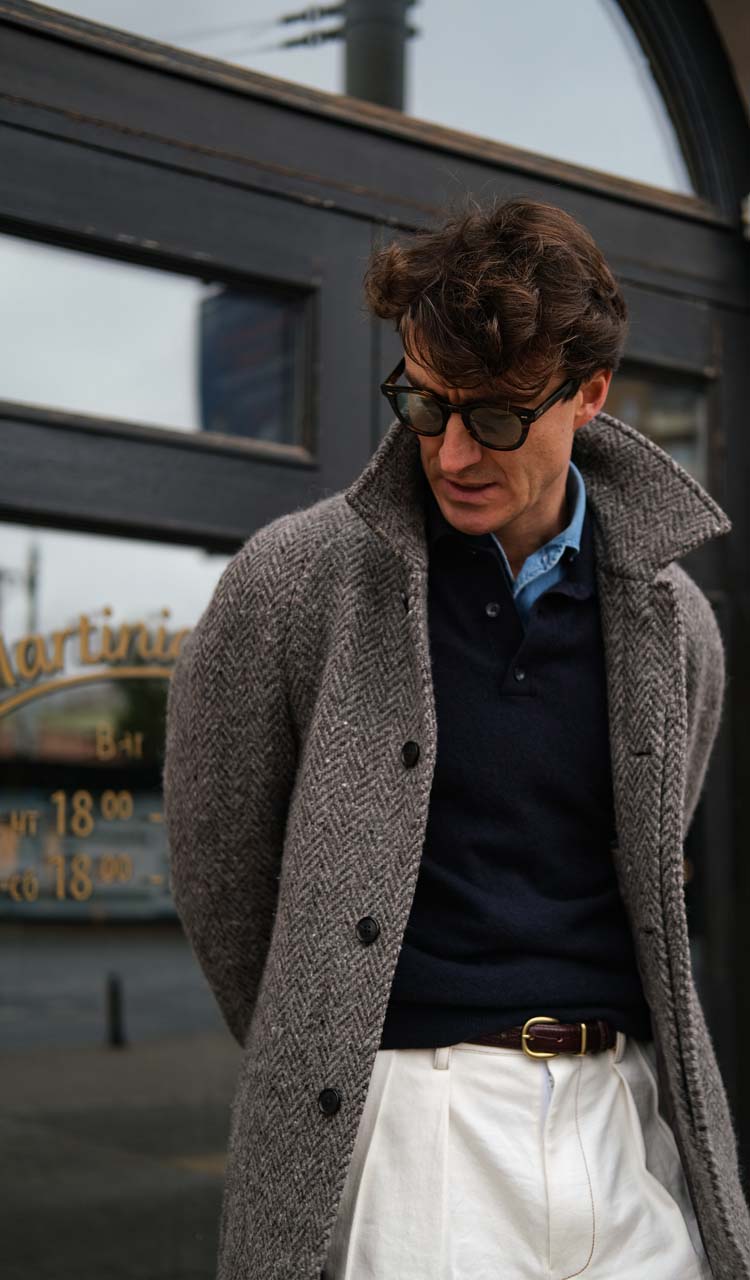
The reason is simple: I wear natural fabrics.Wool, cashmere, cotton — they keep warmth in, while allowing your body to breathe. Synthetic fabrics, on the other hand, often make you feel colder because they block airflow and trap moisture.
The Hat — A Complicated Relationship
Hats and I have a complex relationship. I own one dark navy beanie, and that’s enough for me. Here’s my advice: don’t pull it too low over your face or ears. Leave a little space — it makes your overall appearance softer and more balanced.
You can experiment with color, but make sure it fits within your winter wardrobe and doesn’t stand out for the wrong reasons.
Winter style isn’t about surviving the cold — it’s about finding beauty in it. A well-made coat, the right shoes, a scarf, gloves, attention to detail and quality fabrics — these create not just a look, but a state of confidence and calm.
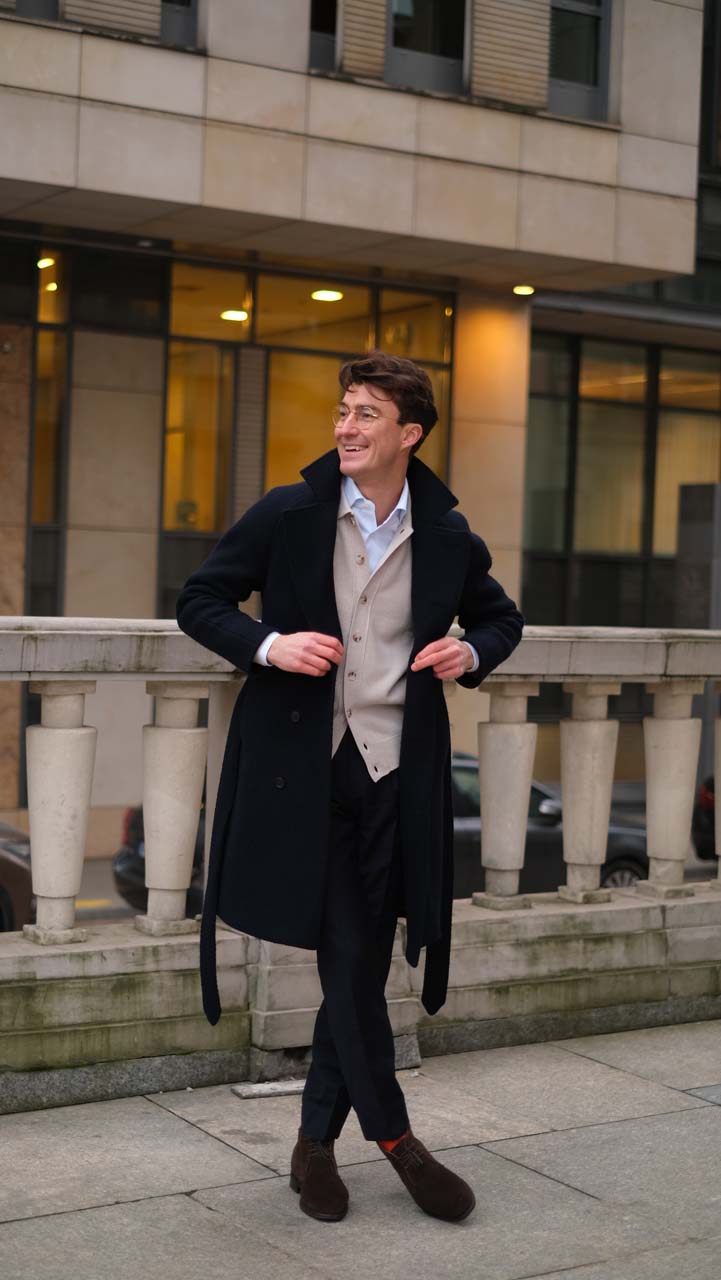
Pieces made from natural materials last longer, look better, and bring that quiet warmth you can’t measure in degrees. So think of winter not as a challenge, but as another season to express your taste, self-respect, and appreciation for details.
Quote of the Week
“To improve is to change; to be perfect is to change often.”
— Winston Churchill
Fact in the Spotlight
In the 19th century, gentlemen’s gloves were considered a symbol of respect and were worn almost everywhere — even when shaking hands. Removing your glove too early or touching someone bare-handed was seen as overly familiar. Today, gloves are more about comfort than etiquette, but the idea remains the same — a true gentleman always pays attention to details.
That’s all for today. See you on Saturday next week!
Yours sincerely, Anton Masko